
In Part 1 of this series, I examined the interrelated risks tied to critical infrastructure, the origins of our current situation, and why a comprehensive strategy is necessary for effective identification, quantification, and mitigation.
In this section, we’ll examine the environmental factors that are reshaping wildfire behavior—and how our energy infrastructure both amplifies and complicates the challenge of developing effective models.
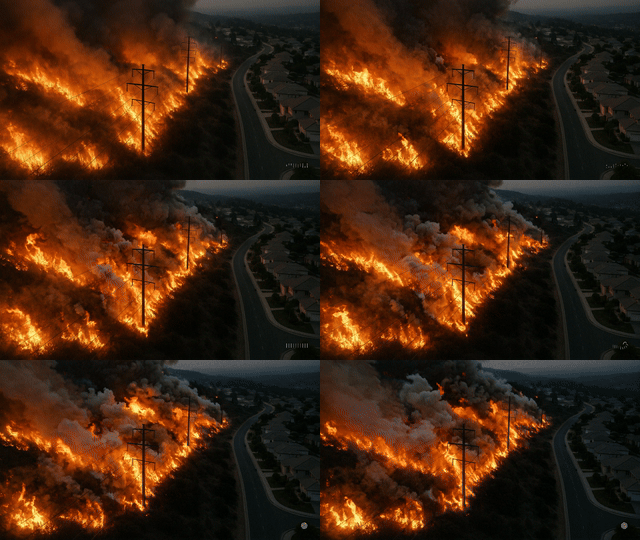
The Risk Landscape is Shifting
Wildfire was once thought of as a seasonal hazard. Winter rain and snow fueled spring growth. Through summer, vegetation cured and dried, setting the stage for a predictable “fire season.” It would arrive, it would pass, and the industry could plan around it.
But the foundations of seasonality have collapsed. Today we see:
Longer, hotter dry periods that stretch well beyond the traditional summer window.
Shifts in precipitation that make both droughts and deluges more extreme.
Urban expansion into wildland areas is increasing both ignition sources and exposure to fire.
The impact has been dramatic. The Marshall Fire tore through Colorado neighborhoods in December. Canada’s 2023 fire season burned relentlessly across spring, summer, and fall. And California now recognizes “fire weather” as a year-round condition.
Infrastructure as Both Villain and Victim
Energy systems are caught in a dangerous paradox.
Villain. Much of our infrastructure was built for a different era—designed around climate and weather patterns that no longer exist. As these assets age, their threat profile shifts: materials degrade, safety margins narrow, and outdated designs no longer meet modern standards for resilience and safety. Power lines, substations, and pipelines are now frequent sources of ignition. A single spark on a windy day can cascade into catastrophe.
Victim. For many of the same reasons, these systems are also highly vulnerable once a fire starts. Transmission corridors, fuel depots, and compressor stations often lie directly in the path of advancing flames, with the potential to disrupt critical services for weeks or months.
The double bind is clear: our energy infrastructure can both cause wildfire and be destroyed by it.
The Economics of Fire and Energy
The financial consequences of this paradox are staggering. Insurers are retreating from high-risk regions, driving up costs for utilities and operators. Liability claims and lawsuits—most notably PG&E’s bankruptcy—demonstrate how wildfire can upend the balance sheet of even the largest companies.
At the same time, regulators from CPUC to PHMSA to FERC are raising expectations, requiring operators to show that wildfire risk is being addressed proactively.
Wildfire is no longer “force majeure” or “an act of God.” It is a foreseeable risk with measurable financial and operational consequences—and it demands a new strategic approach.
Emerging Strategies
Across the sector, strategies are beginning to evolve:
Vegetation Management: Moving from annual trimming cycles to data-driven programs.
Sensing Technology: From satellites to ground-based platforms, sensors now provide continuous monitoring of fuels, weather, and assets, creating a clearer picture of evolving wildfire risk.
Grid Hardening: Undergrounding transmission lines, deploying fire-resistant poles, and investing in distributed energy resources like microgrids that can sustain operations during fire events.
Predictive Analytics: Integrating weather forecasts, vegetation models, and infrastructure condition data into risk frameworks that help operators prioritize investments and interventions.
These are critical steps—but resilience requires a unifying thread. That thread is geospatial intelligence.
In Part 3, we’ll explore how geospatial technology can be integrated into these strategies—providing the detection, prediction, and decision-making foundation needed to build truly fire-resilient energy systems.