
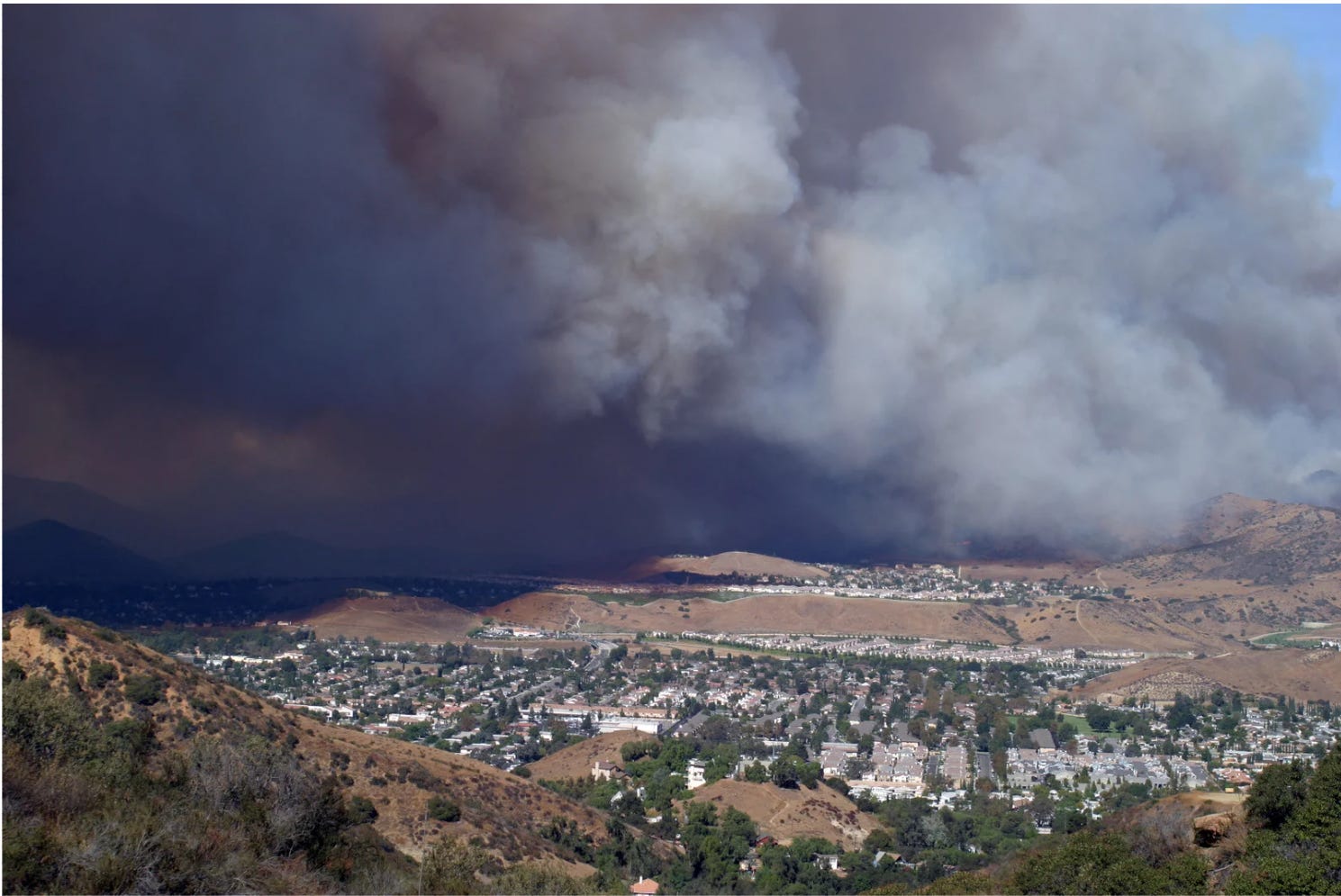
Living in a wildfire-prone area, I’ve seen firsthand how quickly the air can become thick with smoke and the sky shift to an ominous orange, how these events impact communities, and how the companies I work with constantly battle the probability and the consequences of these events. These moments are no longer rare—they’re a stark reminder that the wildfire threat has fundamentally changed. No longer a seasonal event, it’s now a constant and growing risk that demands a new approach to managing our power and energy systems. Longer fire seasons, hotter temperatures, and unpredictable wind events are rewriting the risk landscape for energy assets.
The Ripple Effect on Power & Energy
The nation’s electric transmission lines, gas pipelines, and fuel depots are the circulatory system of modern life. When wildfire impacts these assets, the effects spread far beyond the immediate damage:
Your infrastructure could start a fire: Downed lines, faulty equipment, and even routine maintenance can become ignition sources during high fire danger.
A wildfire could compromise your infrastructure: Fires can cause catastrophic damage, resulting in prolonged outages and significant supply chain disruptions.
One event can trigger massive consequences: A single wildfire can cascade into regional blackouts, environmental liabilities, and long-term reputational harm.
The Forces Behind the Fire
A convergence of forces fuels this heightened threat:
Climate Change – Hotter, drier conditions create landscapes primed for ignition.
Land Use Change – Growth into wildland–urban interfaces (WUI) puts critical assets closer to ignition sources.
Infrastructure Expansion – More renewable and hydrocarbon infrastructure is being placed in high-risk zones.
Actionable Intelligence for a Safer Future
Understanding wildfire risk is no longer enough. Operators must quantify, predict, and mitigate that risk using intelligence that’s both actionable and operational. The rest of this series will explore:
Part 2 – The unique risk pathways for electrical and hydrocarbon systems.
Part 3 – How remote sensing and data-driven intelligence can strengthen resilience.
Part 4 – Leveraging GeoAI for predictive and proactive wildfire management.
Part 5 - Field Verification and Operational Integration
Part 6 - Long-Term Resilience and Policy Alignment
Part 7 - The Future: From Reactive to Predictive Systems
By shifting from viewing wildfire as an isolated hazard to seeing it as a system-wide operational threat, we can create a more resilient and prepared energy future.