
In the first five parts of this series, we’ve explored the immediate challenges of wildfire management—from predictive modeling and operational readiness to emergency response. Now, we shift our focus to the long-term horizon. True transformation in wildfire resilience extends beyond managing the next fire season; it requires embedding resilience into the very foundation of our energy and infrastructure policy. This convergence of engineering and governance creates strategic advantages for organizations that align their efforts with broader climate adaptation initiatives and evolving capital market expectations.
Protecting Hydrocarbon Infrastructure
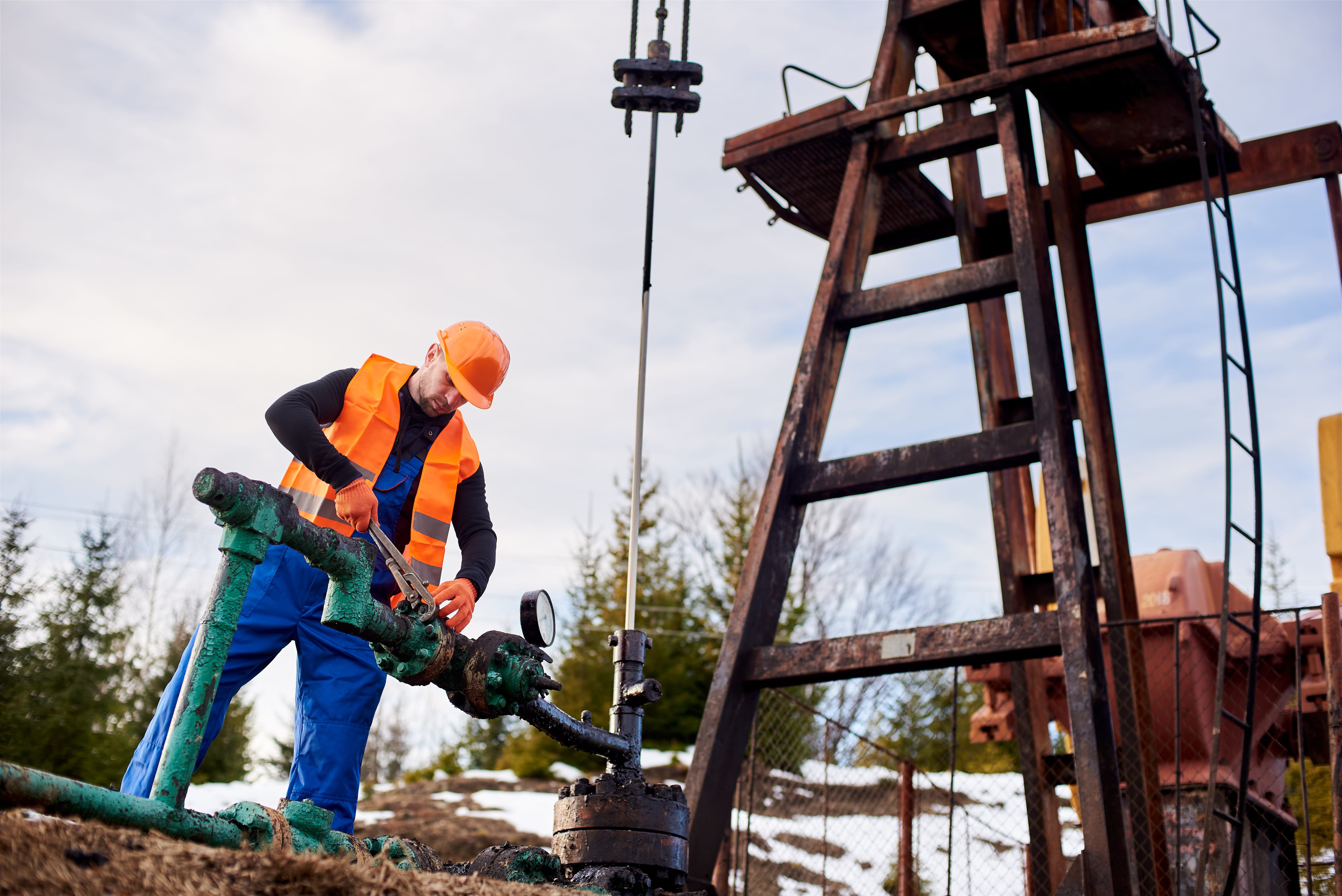
Defensible space strategies extend beyond residential areas in wildland-urban interfaces. Midstream facilities, tank farms, and compressor stations frequently operate in high-fuel environments and require equivalent protection measures. Strategic vegetation clearing, engineered fire breaks, and emergency water reserves serve as force multipliers when wildfires threaten critical infrastructure. For oil and gas companies, these measures are rapidly becoming essential components of external threat management, directly supporting safety compliance expectations from regulators such as the Pipeline and Hazardous Materials Safety Administration (PHMSA).
Infrastructure Hardening: Generational Investments
The most visible and costly component of wildfire resilience involves hardening the built environment. This encompasses significant investments such as undergrounding power lines, utilizing fire-resistant materials for poles and substations, and completely redesigning utility corridors. These initiatives represent far more than engineering projects—they are generational resilience investments with decades-long payback periods. For organizations operating in high-risk regions, today’s redesign decisions can prevent billions in future liability while establishing a lower risk profile for years to come.
Case Study: PG&E’s Transformation Through Crisis
The devastating California wildfires, including the catastrophic 2018 Camp Fire, provided a sobering case study for the entire utility sector. Equipment failures linked to PG&E’s aging infrastructure resulted in billions of dollars in liability, led to bankruptcy, and caused irreparable damage to public trust. In response, the company undertook a comprehensive, long-term strategic transformation centered on resilience.
This transformation encompasses three critical areas:
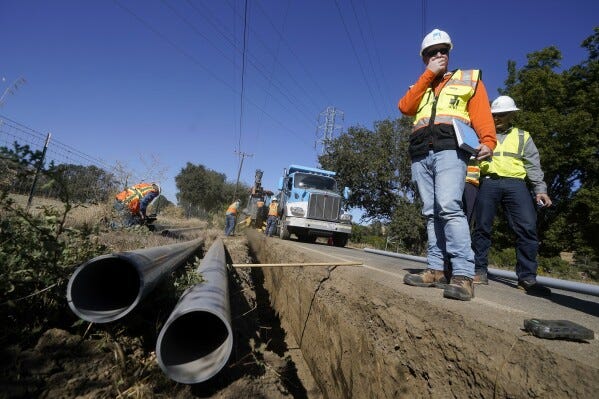
Aggressive Undergrounding Initiative: PG&E launched an ambitious program to underground 10,000 miles of power lines in high-risk areas. This direct response to overhead line ignition risks demonstrates how infrastructure hardening can become an existential strategy for utilities facing climate-related threats.
Comprehensive System Upgrades: Beyond undergrounding, PG&E is replacing bare power lines with stronger, covered conductors and installing more robust poles engineered to withstand extreme wind events. These foundational investments specifically target the reduction of ignition risk.
Regulatory Alignment: This multi-billion-dollar effort operates under close supervision from the California Public Utilities Commission (CPUC) and other state agencies. This collaboration illustrates how regulatory pressure and public accountability can accelerate alignment between corporate operations and state-level climate adaptation frameworks.
PG&E’s evolution from reactive crisis management to a proactive long-term resilience strategy underscores a fundamental principle: while mitigation costs are substantial, they pale in comparison to the expenses of inaction. Their experience serves as a potent reminder that organizations must integrate long-term resilience into their core business models to survive and thrive in an increasingly risk-conscious environment.
Strategic Renewable Energy Siting
The ongoing energy transition introduces additional complexity: renewable installations must incorporate resilience from the design phase. Solar farms located in high-ignition zones face significant operational downtime and escalating insurance costs. Wind installations in dry grassland corridors require proactive fire breaks and strategic vegetation buffers. Advanced GeoAI technologies can optimize siting decisions by integrating fire risk data with land availability and transmission access considerations. This approach ensures new projects are inherently resilient rather than requiring costly retrofits under emergency conditions.
Integration with ESG and Climate Frameworks
Practical resilience efforts must align with the evolving language of capital markets. Investors increasingly scrutinize Environmental, Social, and Governance (ESG) metrics and climate adaptation strategies, with wildfire preparedness emerging as a material risk factor in investment decisions. Aligning resilience initiatives with established frameworks—from Task Force on Climate-related Financial Disclosures (TCFD) requirements to state-level adaptation roadmaps—ensures that wildfire planning transcends operational necessity to become a governance advantage. This strategic alignment creates new opportunities for financing, favorable insurance terms, and enhanced community trust.
Conclusion
Long-term wildfire resilience requires a fundamental shift from reactive crisis management to proactive, integrated planning that spans engineering, policy, and financial considerations. Organizations that successfully navigate this transformation will not only protect their assets and communities but also position themselves strategically in an evolving risk landscape, where resilience becomes a key competitive differentiator.