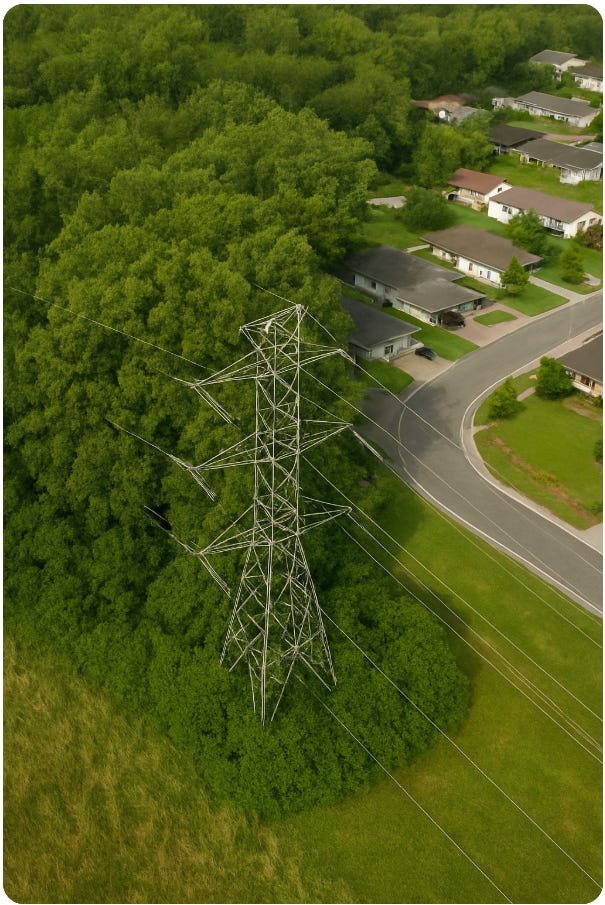
What is vegetation management? At its core, vegetation management systematically controls plant growth around critical infrastructure, especially electric lines, pipelines, and access roads. It’s not simply tree trimming; it’s a strategic discipline that blends ecology, engineering, risk analysis, and community safety.
Effective vegetation management answers a fundamental question:
This Substack is reader-supported. To receive new posts and support my work, consider becoming a free or paid subscriber.
How do we coexist safely with the natural environment while maintaining the infrastructure that powers and protects our lives?
The Stakes Are Rising
Vegetation-related risks to infrastructure grow more complex every year. Aging assets, hotter and drier seasons, and expanding urban-wildland interfaces create dangerous overlaps. A single branch brushing against a power line—or roots undermining a buried gas pipeline—can trigger consequences measured not just in outages or repair costs, but in lives lost.
The Camp Fire cost PG&E more than $30 billion in liabilities, forcing it into bankruptcy.
Vegetation contact was linked to one in every four major outages in the U.S. between 2015 and 2020.
Globally, utility-caused wildfires are increasing alarmingly, fueling scrutiny from insurers, regulators, and the public.
When Maintenance Becomes a Matter of Life and Death Vegetation management failures used to mean fines and bad press.
Today, they mean criminal investigations, shareholder lawsuits, and billion-dollar judgments. Utilities and energy operators are no longer judged by if an accident happens—but whether they did everything reasonably possible to prevent it.
Regulators are tightening expectations:
California introduced mandatory wildfire mitigation plans.
FERC (Federal Energy Regulatory Commission) strengthened vegetation clearance standards for transmission lines.
Insurance carriers are raising premiums or dropping coverage entirely for utilities without aggressive vegetation programs.
It’s Not Just About Risk—It’s About Resilience When discussing resilience, we often picture new materials, smart grids, or backup systems.
However, resilience includes a practical assessment of the infrastructure and its environment. It includes modeling the consequences and understanding who and what is at risk in an emergency. It includes an analysis of the vegetation, the infrastructure, and the overlooked spaces between our structures.
Vegetation management is preventive resilience—an early intervention that protects infrastructure before disaster strikes. As technology advances, the possibilities for proactive, intelligent, and sustainable vegetation strategies are growing.
Looking Ahead In the next part of this series, we’ll examine how electric utilities are confronting the unique challenges—and opportunities—of vegetation management in a rapidly changing world.
What technologies is the industry using to assess these risk areas? How are they storing, indexing, and analyzing this information? How are they turning the analysis into action?
I look forward to your thoughts and ideas as I share mine.
This Substack is reader-supported. To receive new posts and support my work, consider becoming a free or paid subscriber.